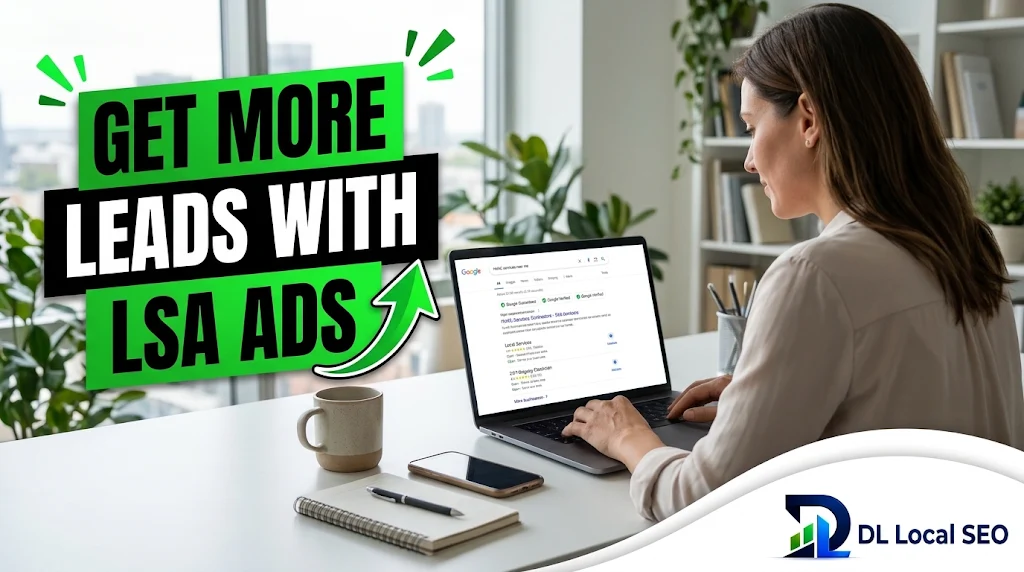
Google Local Services Ads (LSA): Cost, Google Guaranteed and How They Compare to SEO
Quick answer
There are two ways to land above the regular results when someone searches “plumber near me”: pay for each lead with Google Local Services Ads, or earn a Map Pack spot with your Google Business Profile and local SEO. If you need calls within the next few weeks and someone can answer the phone live all day, start with Local Services Ads; if you plan to be in the same market longer than 6–12 months, make Map Pack SEO the base and keep LSA as a top-up. LSA works fast because there are no keywords or ad copy — once Google verifies your license, insurance and background checks, your ad can show at the very top with a Google Verified badge and you pay only when a customer calls, messages or books. The catch is the price: in Q1 2026 an average lead cost $35.70 for electricians, $56.90 for plumbers and $76.45 for HVAC companies, and the ads disappear the day the budget stops, while a Map Pack position keeps sending calls at no cost per lead. One more thing to plan for: since October 1, 2026, a missed call during business hours that lasts over 20 seconds counts as a charged lead.
What Are Google Local Services Ads?
Google Local Services Ads are pay-per-lead ads for service businesses that appear at the top of Google Search and Maps with your rating, years in business, service area and a Google Verified badge. You don’t choose keywords or write ad text — Google matches your ad to searches based on the job types and ZIP codes you select and charges you per lead, not per click.
A “lead” is a phone call through Google’s tracking number, a message or a booking request that comes from the ad. Calls are recorded (with the customer’s consent), and every lead lands in a lead inbox where you can listen back, reply and mark the job as booked. LSA is open to home services such as plumbing, HVAC, electrical, roofing, cleaning and pest control, and to professional services such as lawyers, real estate agents and financial planners — but categories and requirements differ by state, so check eligibility for your exact trade and ZIP codes before you plan a budget.
How Much Do Google Local Services Ads Cost?
You set a budget and Google charges per valid lead; most U.S. home-service trades paid between $25 and $77 per lead in Q1 2026, with damage restoration near $194. There’s no setup fee and no charge for impressions or for people who only view your profile.
| Trade | Avg. cost per lead (Q1 2026) | Cost per booked job if 1 in 3 leads books | Ticket that keeps ad cost under 10% |
|---|---|---|---|
| Landscaping | $25.20 | $76 | $760+ |
| Pressure washing | $26.33 | $79 | $790+ |
| Carpet cleaning | $32.13 | $96 | $960+ |
| Electrical | $35.70 | $107 | $1,070+ |
| Plumbing | $56.90 | $171 | $1,710+ |
| Roofing | $65.80 | $197 | $1,970+ |
| HVAC | $76.45 | $229 | $2,290+ |
| Damage restoration | $194.00 | $582 | $5,820+ |
Cost per lead: 99 Calls, Q1 2026 data from 3,367 U.S. contractor leads. Booking rate and ticket columns are our illustrative math — plug in your own close rate.
What you’re charged for has widened in 2026, and it changes the math more than the price per lead does:
- Missed calls. From October 1, 2026, a call during your business hours counts as a lead if the caller stays on the line longer than 20 seconds — even if nobody picks up (PPC Land).
- Repeat calls. If a first call doesn’t qualify, a later call from the same person that meets the lead rules is charged.
- Off-target jobs. Leads for a service you don’t offer or an area you don’t cover are no longer credited — your job-type and ZIP settings are your only protection.
- What still gets credited. Spam, wrong numbers and duplicates are reviewed and credited automatically; manual disputes are gone, and the only feedback left is rating a lead in your inbox.
Before raising the budget, it’s worth knowing what a non-paid channel would cost for the same calls — our breakdown of local SEO cost gives the monthly ranges to compare against.
Not sure LSA pays off at your ticket size?
Book a free 15-minute consultation. We’ll run your average job value, close rate and trade’s cost per lead and tell you how much of your budget belongs in LSA — and how much in the Map Pack.
Google Guaranteed Is Now Google Verified: What Changed
Google replaced the Google Guaranteed, Google Screened and License Verified badges with one Google Verified badge on October 20, 2025, and ended the money-back guarantee that came with Google Guaranteed. Customer reimbursement claims were accepted only for services booked before December 7, 2025.
If you see “Google Guaranteed local service ads” in an old quote or a sales pitch, it’s describing the previous program. The checks behind the new badge are much the same, and they’re what take the time when you apply:
Verified Business Profile
Every advertiser needs a public, verified Google Business Profile. If yours is stuck, fix that first — LSA can’t launch without it. Our Google Business Profile optimization service starts exactly there.
License and insurance
A state business license and owner license where your state requires them, plus general liability insurance in most categories. Names and addresses must match your profile.
Background checks
Business and owner checks in most categories; urgent trades — electrician, garage door, HVAC, locksmith, plumbing — also screen the technicians who go into homes.
Requirements per category are listed in Google’s business screening and verification requirements. Restaurants and other dining businesses can’t get the Google Verified badge at all.
How Local Services Ads Ranking Works
LSA isn’t a pure auction: Google ranks ads by how close you are to the customer, your review score and count, how fast you answer leads, your budget and your business hours. A business with 180 reviews that answers in two minutes can outrank a competitor that spends more.
- Answer every call live during your listed hours. Responsiveness is a ranking signal, and since October 2026 a missed call can also be a charged lead — list only the hours you can staff.
- Keep reviews coming every week. Your LSA rating pulls from Google reviews, so the same review system that grows your Map Pack ranking lifts your ads. If you get a bad one, here’s how to respond to negative reviews.
- Mark leads as booked and archive junk. Lead status and ratings in the inbox tell Google which leads are real jobs for you.
- Turn off job types you don’t want. Each enabled job type is a door for leads you’ll pay for and can’t dispute.
- Cover a realistic radius. Distance is the one factor you can’t buy; a smaller service area with fast response beats a wide one you can’t serve.
LSA Inside Google Ads: The 2026 Migration
Google is moving Local Services Ads into Google Ads as a pay-per-lead campaign inside Performance Max: select U.S. home-service and storefront advertisers started moving in August 2026, service-area businesses without storefronts follow in late 2026, and remaining accounts in 2027.
The ads still run only on Search and Maps, stay keywordless and are still billed per lead. What changes is how you manage them. The old LSA dashboard stops working on your migration day and its campaign history — impressions, clicks, weekly spend — doesn’t carry over, so export it after the 14-day notice email arrives. Lead history, call recordings and messages move into a new Lead Manager. Manual bidding with a maximum cost per lead is gone, a single campaign-level Target CPA replaces per-trade targets, and weekly budgets become daily ones (your average weekly budget divided by seven), with monthly spend capped at 30.4 times the daily amount. If you used different targets for, say, drain cleaning and water heaters, you’ll need separate campaigns (details on PPC Land).
Local Services Ads vs Local SEO: Which Should You Pay For?
Use Local Services Ads for speed and predictable volume, and local SEO for the lowest cost per call over time; most service businesses that grow steadily run both and shift budget toward SEO as Map Pack rankings rise. If you’re comparing SEO with classic pay-per-click instead, see Local SEO vs Google Ads.
| Question | Local Services Ads | Local SEO (Map Pack + website) |
|---|---|---|
| First calls | Days after verification is approved; verification itself often takes several weeks | Usually 2–4 months for a profile and site that start from scratch |
| Month 6 cost per call | Same as month 1 or higher as competitors join | Falls as more pages and the profile rank; the fee stays flat |
| If you stop paying | Ads disappear the same day | Rankings fade over months, not overnight |
| Control over lead mix | Job types and ZIP codes only; off-target leads aren’t credited | Each service page targets the exact jobs you want |
| What it builds | Nothing you keep — the ad slot is rented | Reviews, citations and pages that also feed Google’s AI answers |
| Best fit | New businesses, seasonal peaks, emergency trades | Businesses planning to stay in the market for years |
The two also help each other. LSA borrows your Google review rating, so every review you earn for SEO makes the ad more clickable, and LSA call recordings show which jobs people ask for most — a ready-made list of service pages to build. Our local SEO service uses that data when a client already runs LSA. If you’re still weighing whether SEO is worth the wait, we ran the numbers in Is Local SEO Worth It?.
Paying for leads you could rank for?
Get a free analysis of your 3 priority pages. We’ll show which of your LSA job types you could win in the Map Pack and organic results — and what it takes to get there.
Before You Launch Local Services Ads: A Checklist
Have a verified Business Profile with matching name and address, your license and insurance documents, at least a handful of recent Google reviews and a person ready to answer calls before you apply — those four things decide how fast you’re approved and how well the ads rank.
- Pick job types one by one: enable only the jobs that make money at your trade’s cost per lead.
- Draw the service area by ZIP code where you can reach a customer within your promised response time.
- Set business hours to the hours someone answers — not the hours on your door.
- Record a short greeting that names your business, so callers stay on the line and know they reached the right company.
- Decide who replies to messages and booking requests, and how fast (aim for under 10 minutes).
- Add your best real job photos and a short bio; they show on the profile customers open before calling.
- Track booked jobs and revenue per lead in a spreadsheet or your CRM from week one — the inbox shows leads, not profit.
Examples: Two Ways LSA Fits a Local Business
Illustrative example · HVAC company
Using LSA for summer peaks, SEO for the rest of the year
An HVAC company sets a $90 daily budget for June–August. At about $76 per lead that buys roughly 35 leads a month; with one in three booking an average $1,800 repair or install, each month brings around $21,000 in jobs for about $2,700 in ads. In fall, when lead quality drops, the company cuts LSA to weekends and puts the difference into service pages for furnace repair and heat pumps, so winter calls come from the Map Pack instead.
Illustrative example · House cleaning service
When missed calls start costing money
A two-person cleaning business lists 8 a.m.–6 p.m. hours but cleans homes all day and returns calls at night. After October 1, 2026, every unanswered call that rang longer than 20 seconds turns into a charge. The owner changes listed hours to the two time windows a helper can answer, adds message replies within 10 minutes, and puts the savings into getting reviews and a dedicated page for move-out cleaning.
FAQ: Google Local Services Ads
How much do Google Local Services Ads cost?
You pay per lead, not per click, and set your own budget. In Q1 2026 average costs per lead ranged from about $25 for landscaping and pressure washing to $57 for plumbing, $66 for roofing and $76 for HVAC, with damage restoration near $194. There’s no setup fee.
Is Google Guaranteed still available?
No. On October 20, 2025, Google replaced Google Guaranteed, Google Screened and License Verified by Google with a single Google Verified badge and ended the money-back guarantee. Customers could request reimbursement only for services booked before December 7, 2025.
What is the difference between Local Services Ads and Google Ads?
Local Services Ads charge per lead, need no keywords or ad copy and show above regular ads with your reviews and a Google Verified badge. Classic Google Ads charge per click on keywords you choose. In 2026 Google started moving LSA into the Google Ads platform, but the per-lead billing stays.
Do I get charged for bad leads or missed calls?
Spam, wrong numbers and duplicate leads are credited automatically. Leads for jobs or areas you don’t serve are not credited. Since October 1, 2026, a missed call during business hours is charged if the caller stays on the line longer than 20 seconds.
Can I run Local Services Ads without a Google Business Profile?
No. Every advertiser needs a public, verified Google Business Profile, plus the license, insurance and background checks required for its category and state.
Should I use Local Services Ads or local SEO?
Use Local Services Ads when you need calls quickly or have seasonal peaks, and local SEO when you plan to stay in the market for years and want a lower cost per call over time. Many service businesses run both and move budget toward SEO as Map Pack rankings grow.
Get a Free Map Pack vs LSA Video Audit
Send your Google Business Profile link. You’ll get a short personalized video showing who wins the Map Pack and the LSA slots for your top job, what they do that you don’t, and how many of your paid leads you could earn organically. White-hat only, month-to-month.
Sources: Google Local Services Help — Business screening and verification requirements; 99 Calls — LSA cost per lead by industry, Q1 2026; Location3 — Google is retiring the Google Guarantee; PPC Land — LSA moves into Google Ads; PPC Land — missed-call billing from October 1, 2026.